Hormones are the body’s chemical messengers that regulate essential functions such as metabolism, mood, sleep, energy, fertility, and menstrual health. When hormone levels become too high or too low, they can affect almost every aspect of a woman’s physical and emotional well-being. Understanding the signs of hormonal imbalance can help you recognize changes early and take the right steps toward better women’s hormonehealth.
In this guide, we’ll explore the most common symptoms of hormonal imbalance, possible causes, and practical tips on how to balance hormones naturally for long-term women’s wellness.
What Is Hormonal Imbalance?
Hormonal imbalance occurs when there is too much or too little of one or more hormones in the body. Hormones such as estrogen, progesterone, thyroid hormones, insulin, and cortisol work together to maintain normal body functions. Even a small imbalance can lead to noticeable health issues that affect your energy, mood, skin, weight, and reproductive health.

Common Signs of Hormonal Imbalance
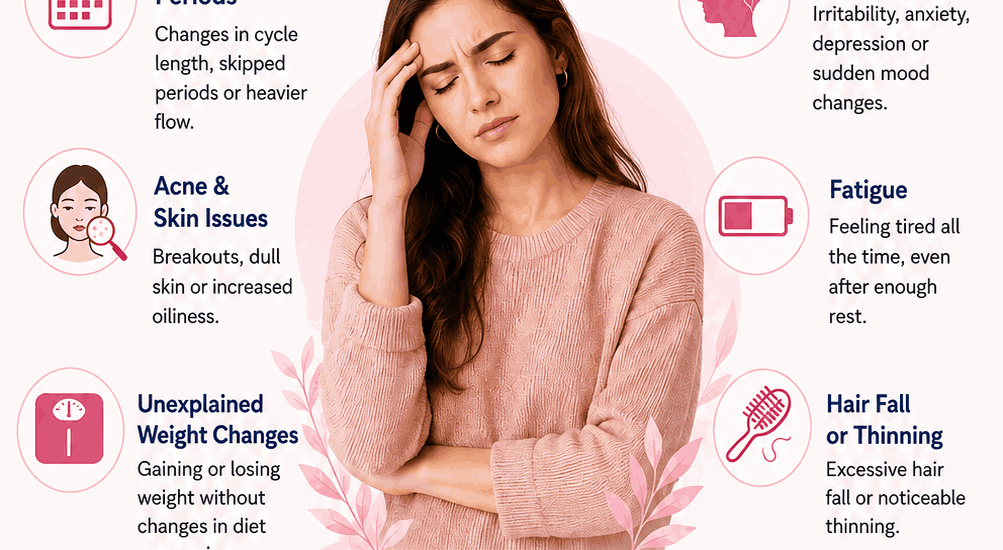
Recognizing the signs of hormonal imbalance early can help prevent complications and improve your quality of life. Here are the most common symptoms women experience.
1. Irregular Menstrual Cycles
One of the earliest symptoms of hormonal imbalance is an irregular menstrual cycle. Periods that are unusually heavy, very light, delayed, or missed altogether may indicate changes in estrogen, progesterone, or thyroid hormone levels. Maintaining good menstrual health is essential for overall well-being.
2. Unexplained Weight Gain or Difficulty Losing Weight
Hormones play a major role in metabolism. Imbalances involving insulin, thyroid hormones, or cortisol imbalance can cause stubborn weight gain, increased belly fat, or difficulty losing weight despite eating well and exercising regularly.
3. Mood Swings, Anxiety, and Depression
Hormones influence brain chemistry. Sudden mood swings, irritability, anxiety, or feelings of sadness may be linked to hormone fluctuations. Chronic stress can also contribute to cortisol imbalance, which may worsen emotional health and sleep quality.
4. Persistent Fatigue
Feeling tired even after getting enough sleep is another common symptom. Hormonal changes affecting thyroid function, cortisol levels, or estrogen can leave you feeling exhausted throughout the day.
5. Hormonal Imbalance and Hair Loss
Many women notice thinning hair or excessive shedding due to hormonal imbalance and hair loss. Low estrogen, thyroid disorders, PCOS, or menopause-related hormone changes can affect healthy hair growth.
6. Acne and Skin Changes
Adult acne, oily skin, or dry skin may signal hormone fluctuations. Increased androgen levels often contribute to acne, while reduced estrogen may cause dry, less elastic skin.
7. Low Libido
Hormonal changes can affect sexual desire. Reduced estrogen or testosterone levels may decrease libido and contribute to vaginal dryness or discomfort.
8. Sleep Problems
Difficulty falling asleep or staying asleep is common during hormone fluctuations. Women experiencing perimenopause symptoms or menopause symptoms often report disrupted sleep due to night sweats and hot flashes.
Common Causes of Hormonal Imbalance
Several factors can contribute to hormone changes, including:
- Chronic stress leading to cortisol imbalance
- Poor nutrition
- Lack of physical activity
- PCOS (Polycystic Ovary Syndrome)
- Thyroid disorders
- Pregnancy and postpartum changes
- Perimenopause symptoms and menopause symptoms
- Certain medications
- Aging and natural hormonal changes
Understanding the underlying cause is important for improving women’s hormone health.
Estrogen Imbalance Symptoms
Estrogen is one of the most important hormones for women. Estrogen imbalance symptoms may include:
- Irregular or heavy periods
- Mood swings
- Hot flashes
- Breast tenderness
- Vaginal dryness
- Fatigue
- Sleep disturbances
- Weight changes
If these symptoms persist, it’s important to consult a healthcare professional for evaluation.
Best Diet for Hormonal Imbalance
Following the best diet for hormonal imbalance can support hormone production and reduce inflammation. Consider including:
- Leafy green vegetables
- Fresh fruits
- Whole grains
- Lean proteins
- Healthy fats from nuts, seeds, avocado, and olive oil
- Omega-3-rich fish
- Fiber-rich foods
- Fermented foods for gut health
Limiting processed foods, sugary drinks, refined carbohydrates, and excessive alcohol may also help maintain hormonal balance.
How to Balance Hormones Naturally
Many healthy lifestyle habits can support hormone function. Here are effective ways on how to balance hormones naturally:
- Exercise regularly with a mix of strength training and cardio.
- Sleep 7–9 hours every night.
- Practice stress management through yoga, meditation, or deep breathing.
- Eat nutrient-rich whole foods.
- Stay hydrated.
- Maintain a healthy body weight.
- Reduce processed foods and added sugar.
- Schedule routine health check-ups.
These habits contribute to better women’s wellness and long-term hormone health.
Natural Remedies for Hormonal Imbalance
While medical treatment may be necessary in some cases, several natural remedies for hormonal imbalance may support overall health:
- Daily yoga and stretching
- Mindfulness meditation
- Herbal teas (consult a healthcare professional before using herbal supplements)
- Regular physical activity
- Balanced nutrition
- Adequate sleep
- Stress reduction techniques
These approaches can complement a healthy lifestyle but should not replace professional medical advice.
When Should You See a Doctor?
You should seek medical advice if you experience:
- Persistent irregular periods
- Severe menopause symptoms
- Ongoing perimenopause symptoms
- Excessive hormonal imbalance and hair loss
- Unexplained weight changes
- Severe fatigue
- Difficulty becoming pregnant
- Symptoms affecting your daily life or reproductive health
Early diagnosis can help identify conditions such as thyroid disorders, PCOS, or other hormone-related issues.
Final Thoughts
Recognizing the signs of hormonal imbalance is an important step toward protecting your long-term health. Whether you’re experiencing irregular periods, mood changes, fatigue, estrogen imbalance symptoms, or hormonal imbalance and hair loss, paying attention to these warning signs can help you seek timely care. Combining the best diet for hormonal imbalance, healthy lifestyle habits, and learning how to balance hormones naturally can support better women’s hormone health, improve menstrual health, and enhance overall women’s wellness.
Disclaimer: This article is for educational purposes only and should not be considered medical advice. Always consult a qualified healthcare professional for diagnosis, treatment, or personalized recommendations regarding hormonal or reproductive health.